Success message
Error message

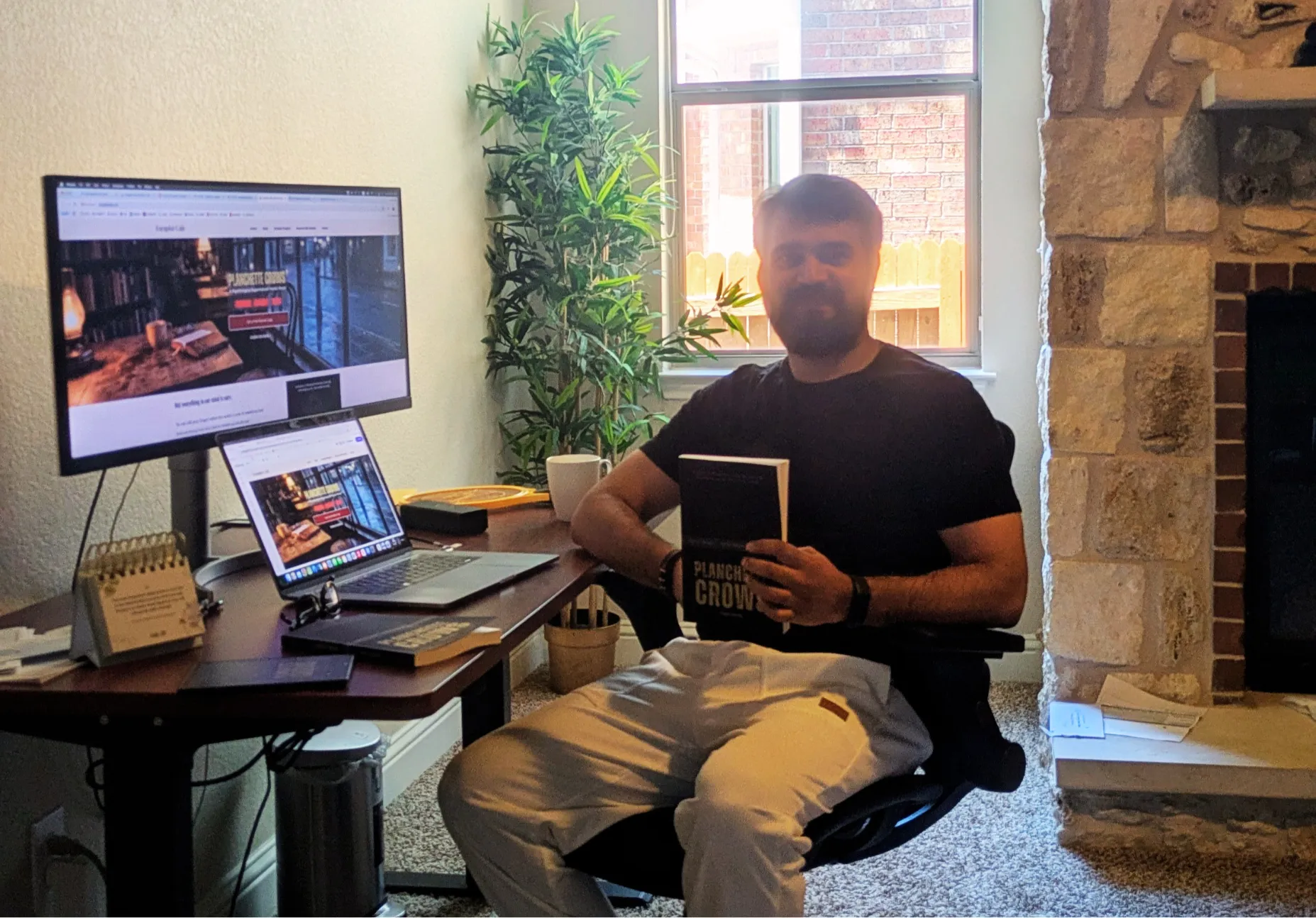
Back in 2002, one midnight, a few of us performed a planchette ritual in a dark hostel room. We were impulsive, curious, and maybe more interested in the thrill of it than anything else. The planchette revealed my exam results, and none of us could have known them by then. I don’t claim to know what happened that night. But somewhere in my mind, a story was born. Over the years, it gathered flesh and bones from unsettling rituals I witnessed, death customs, folklore, superstitions, and a few other experiences that were difficult to categorize. More than two decades later, it finally took its first steps onto the page, growing into a novel. And that was when I discovered how little I knew about writing a novel.
Like many new writers, I began with the WHAT.
What happens? What is the mystery? What is the next twist? What happens after that?
My attention was entirely on the plot. I wanted surprises, revelations, scares, and a climax that would bring everything together. I finished the initial manuscript of the novel more than a year ago. At the time, it felt like a huge achievement. And maybe it was. But soon I learned a valuable lesson: Having a story to tell and knowing how to tell it were two different things.
I worked with two professional editors who introduced me to something I hadn’t thought deeply about: immersion. That led to the second version of the manuscript. Now my questions changed.
How does a place look and feel? How does a character look? How does body language reveal emotion without telling how someone is feeling?
I began paying more attention to setting, sensory detail, and the cardinal rule of writing: show, don’t tell. Deceptively simple. Surprisingly difficult. Tell readers what happened, and they’ll know it. Show them, and they’ll experience it. For a while, I thought I had figured it out.
WHO changed everything. As I continued learning, I began reading differently. I wasn’t reading novels anymore. I was studying them. Why did this scene work? Why did that dialogue feel unnatural? Why did I care about a character even with all their flaws? Gradually, the characters in my novel began bothering me. I started wondering: Who are these people when the plot isn’t asking them to do something? That question turned my approach upside down. I realized that many of the characters in my manuscript existed primarily to serve the plot. The plot needed something to happen, so a character did it. The plot needed information revealed, so someone said it. Once I saw it, I couldn’t unsee it. Ultimately, readers are human beings. They connect with emotions. A plot may intrigue them, but characters give them someone to fear for, hope for, become frustrated with, and care about. So I went back to my characters. I thought about their childhoods. Their personalities. Their insecurities. Their relationships. Their biases. Their fears. The things they wanted but wouldn’t admit. And then something fascinating happened. The characters began interfering with my plot. A character I needed to say something wouldn’t realistically say it. Someone I wanted to make a decision had no convincing reason to make it. A scene I had planned no longer worked because the people I had created wouldn’t behave the way the outline demanded. Move the plot into the passenger seat. Let the characters drive it. Sometimes they took the story away from where I had intended it to go. But those detours often made the story richer because they came from personality rather than convenience. I discovered something particularly important while writing horror: this applies to supernatural too. A supernatural entity cannot simply appear whenever the author needs something frightening to happen. It needed a history, motivations, limitations, and recognizable patterns of behavior. Even the unbelievable needs consistency if we want readers to believe in it. So my evolving formula became:
WHAT impresses. HOW gives an experience. WHO connects.
With my third version finished, I felt pretty good. Almost a year had passed since I had begun working on the novel. I thought perhaps this was it.
I read writing resources and connected with authors in writing communities. Then a thought appeared. Discouraging on the surface, it asked me an uncomfortable question.
Why does this story even matter? Not why someone should read it. But why my novel needed to exist?
That was my lightbulb moment. I began to understand the difference between a story that takes you somewhere and a story that leaves you with something. A message. Something bigger than the story. Something deeper than the story. Not every story needs to preach a message. In fact, I didn’t want mine to. But I wanted it to leave behind something deeper than scares and tears. I realized what my story was about beneath the supernatural mystery, the characters, the fear, and the twists. I knew why my novel needed to exist. Then the elements that had been scattered across the manuscript began connecting in ways I hadn’t anticipated. Character decisions gained more meaning. Supernatural elements became metaphors as much as plot devices. Scenes that seemed important became less important. Small moments I had barely noticed suddenly carried weight. And the puzzled author in me found the final piece:
WHAT impresses the reader. HOW gives them an experience. WHO connects them emotionally. WHY makes the story linger.
I don’t pretend this is a universal formula for writing fiction. It’s simply the path that took me beyond worrying about my novel’s success as a book and gave me the sense that I was creating something with a purpose. And now, a year later… After more than a year of writing, rewriting, learning, deleting, questioning, and rewriting again, the manuscript finally feels ready to leave my hands. Last week, I published my first novel, Planchette Crows. And, conveniently enough for a horror novel, it arrived just in time for Halloween. It’s a psychological horror novel blending Indian folklore and supernatural mystery. The planchette ritual is merely the beginning of a broader mystery involving cryptic prophecies that come true, unsettling death customs, village legends, and revelations that give new meaning to earlier events. The novel earned 9/10 for Originality from The BookLife Prize. Rather than relying on gore or splatterpunk horror, the novel builds slow-burning psychological dread around an unsettling possibility: Not every thought in your mind is yours. Beneath the scares and chills lies a heartfelt coming-of-age story of teenage friendship, first love, and the complexities of parent-child relationships. After spending more than a year asking WHAT, HOW, WHO, and WHY, I’m at the point where the Planchette Crows are ready to fly from my hands. And I’m both excited and terrified to find out what readers think.